
Secrets of the Marula Tree
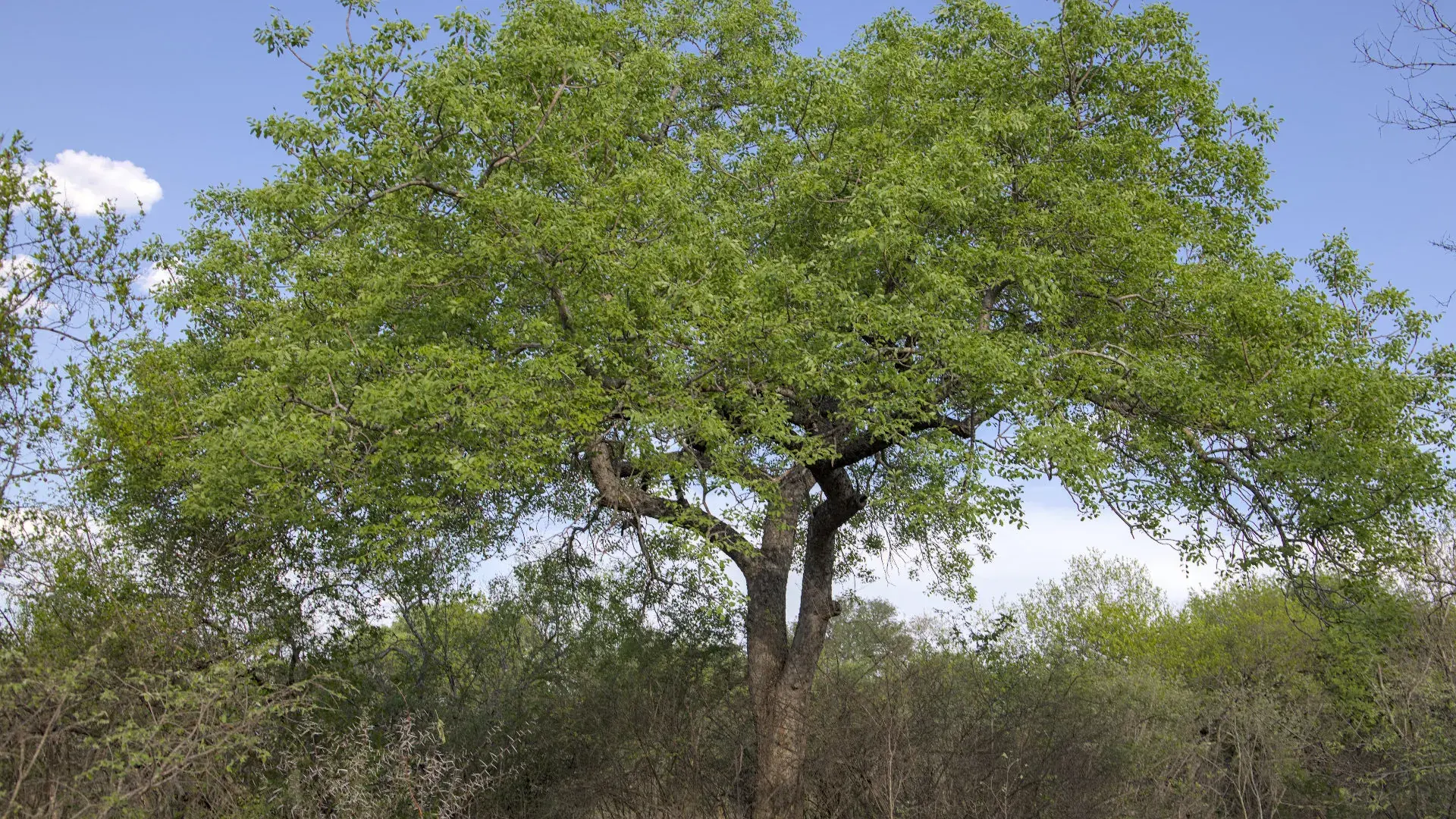
There are few trees that are more iconic of the Lowveld than the marula tree (Sclerocarya birrea). It is a medium-sized, single-stemmed tree with a broad, spreading crown, reaching heights of 9 to 18 meters. It has a thick trunk with very distinctive bark, which transitions from smooth on young branches to flaky on older ones, and the trunk is usually covered in flaking patches of similar size. Once seen, the tree is unmistakable.
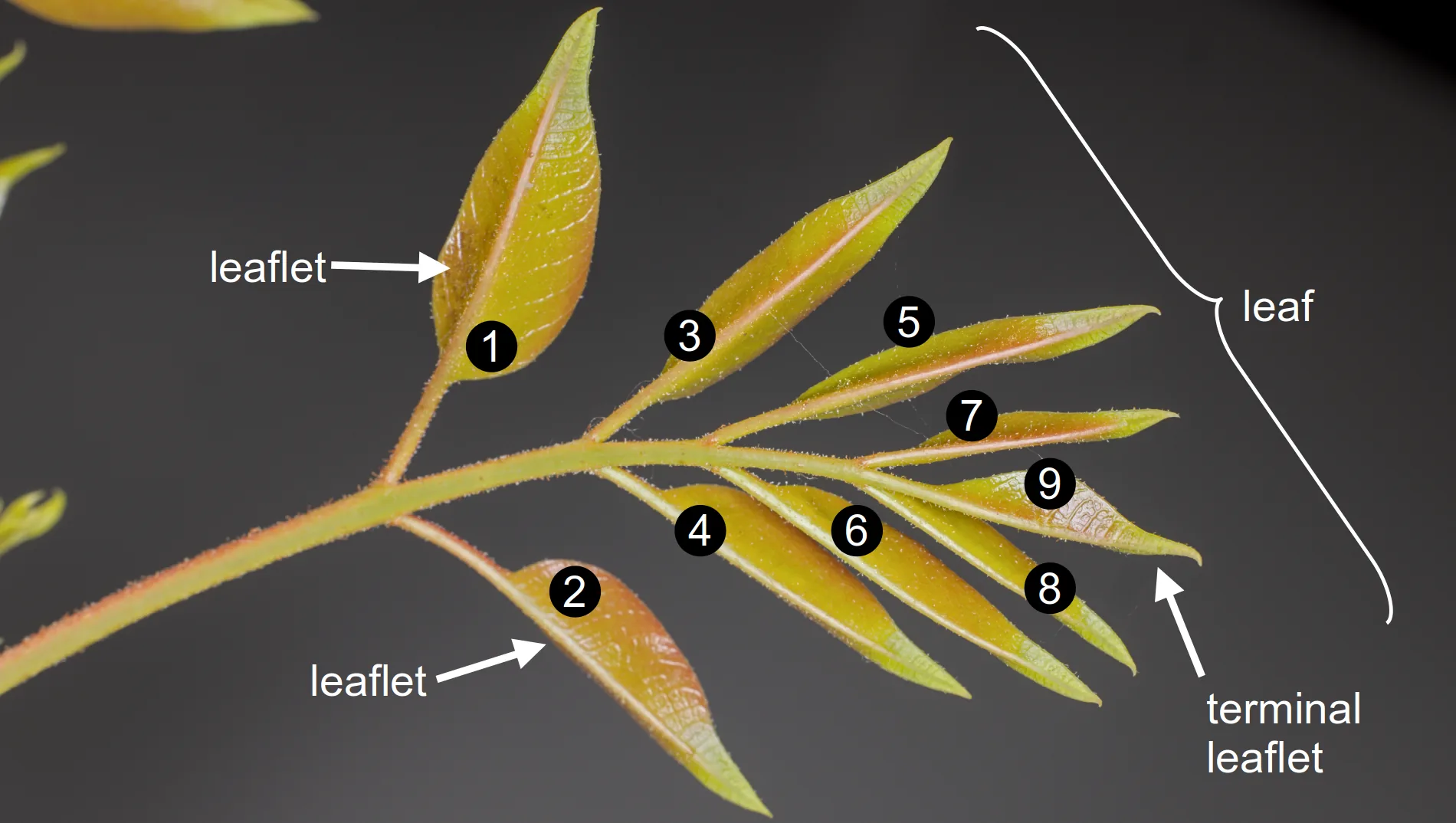
Like many of our trees, the marula has compound leaves, where what looks like a leaf is actually a leaflet of the actual leaf. Each leaf is typically made up of 4 to 6 pairs of leaflets and a terminal leaflet at the branch end. This gives an odd number of leaflets as shown in the illustration.
The marula tree thrives in low altitude savanna and bushveld regions and it is highly resilient to drought. This makes it a prominent feature in various African landscapes, including the Lowveld and Kruger National Park. It is also culturally and economically important, with its history dating back approximately 10,000 years, evidenced by archaeological findings indicating its use as a food source.
The tree is deciduous, losing its leaves at the beginning of winter, and growing new leaves in spring. Throughout the winter dry season the tree is is bare of leaves.
Have you ever wondered why some marula trees don’t produce any fruit at all, while a nearby tree is laden with fruits? This is most likely because the marula tree is dioecious (two houses), which means that individual trees are either male or female. Unsurprisingly, male trees are the ones without fruit!
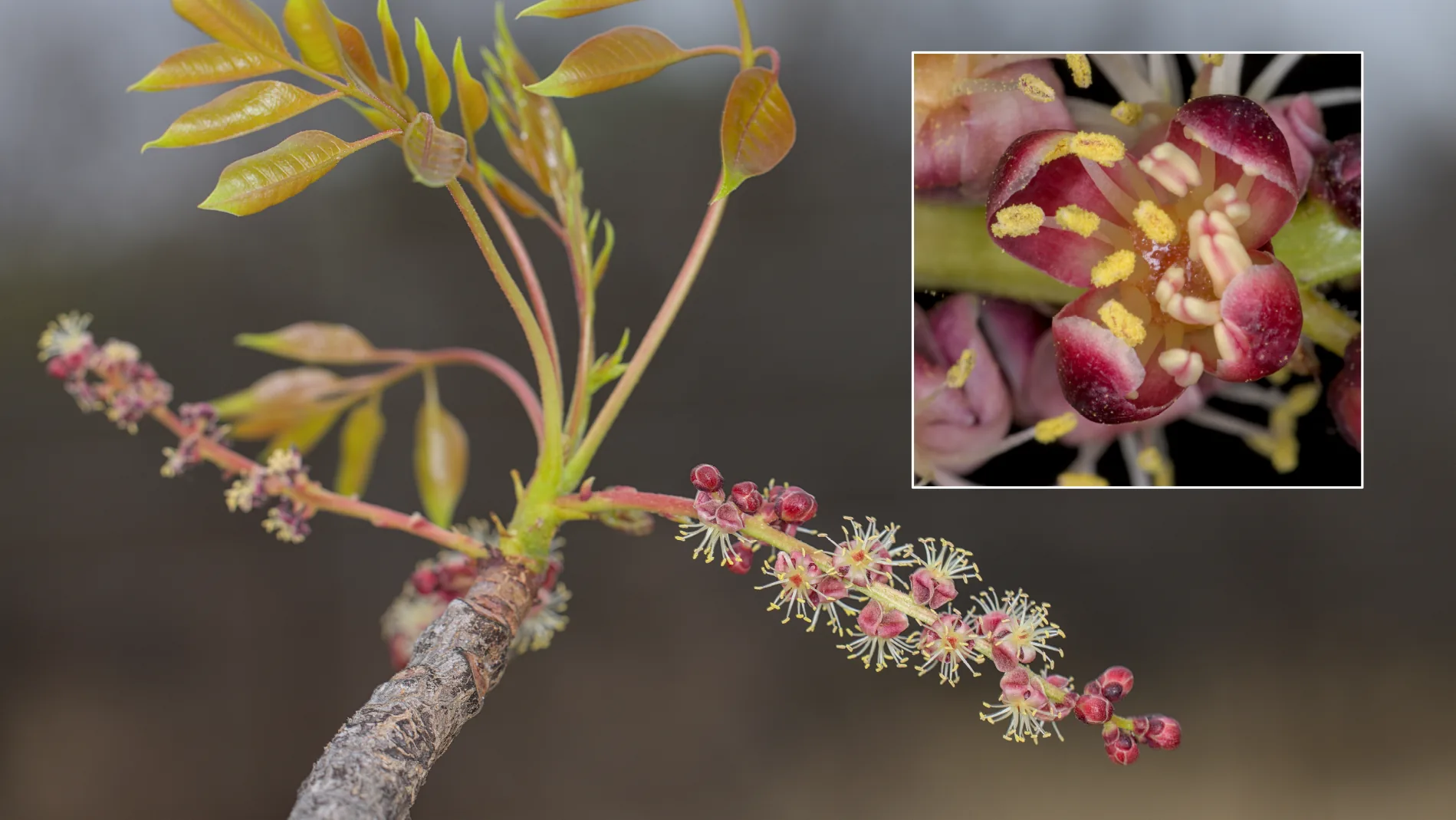
Male trees produce males flowers on an inflorescence comprising a terminal raceme, a flower stem that doesn’t branch but has short floral stalks along it each bearing a flower. Male flowers have red sepals and petals and about 20 stamens that produce pollen.
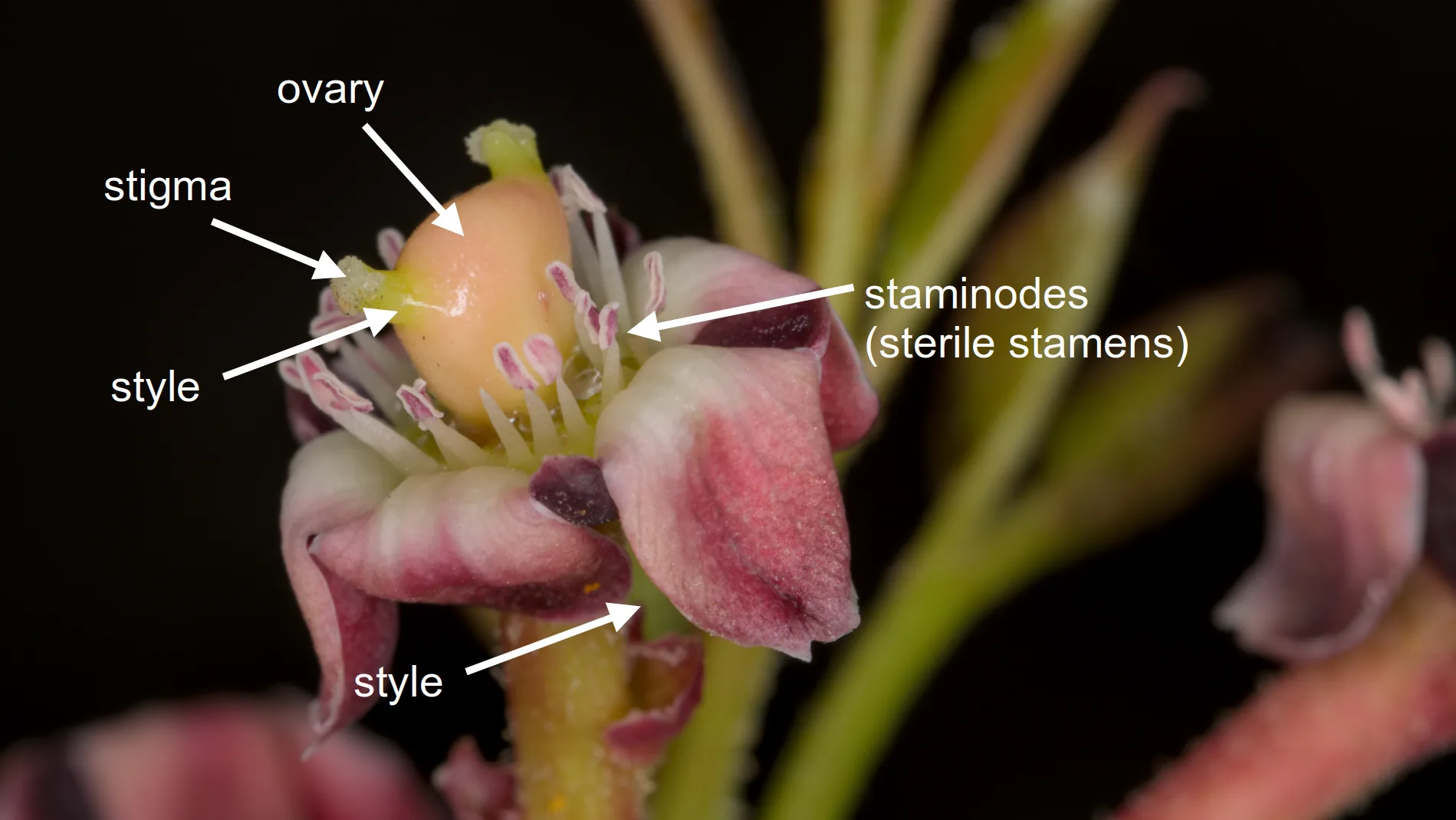
Female trees produce female flowers, each individually on its own flower stalk called a pedicel. Female flowers usually have false stamens known as staminodes, sterile or abortive stamens, which means that it does not produce pollen. In the photos of the female flowers shown here you can clearly see the staminodes.
Since it is dioecious, only the female trees produce fruit the size of a small plum, which ripens from January to March. The fruit doesn’t ripen on the tree, rather it falls to the ground and ripens there, often fermenting quite quickly. It is green on the tree but develops a light yellow skin (called the exocarp) and a white fleshy interior (called the mesocarp) after falling. The fruit contains a large stone (endocarp) with typically two locules, each containing one seed.
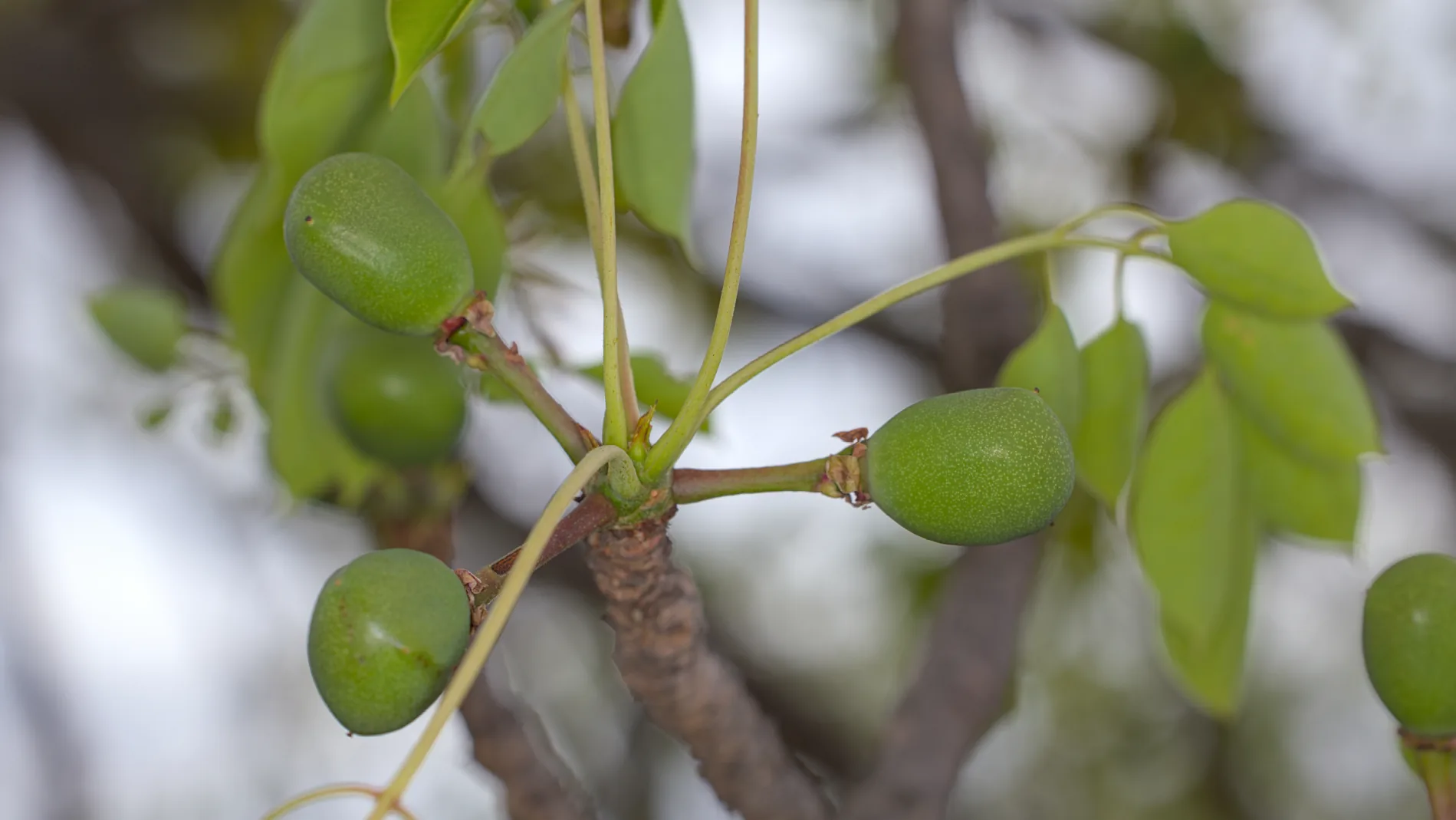
The marula belongs to the family Anacardiaceae, the same family as a number of economically important fruits, including the mango, cashew, pistachio and sumac. This is a large family with about 860 species spread across 83 genera, some of which are economically important. In that regard, the marula is gaining considerable importance for its fruit and the nut contained
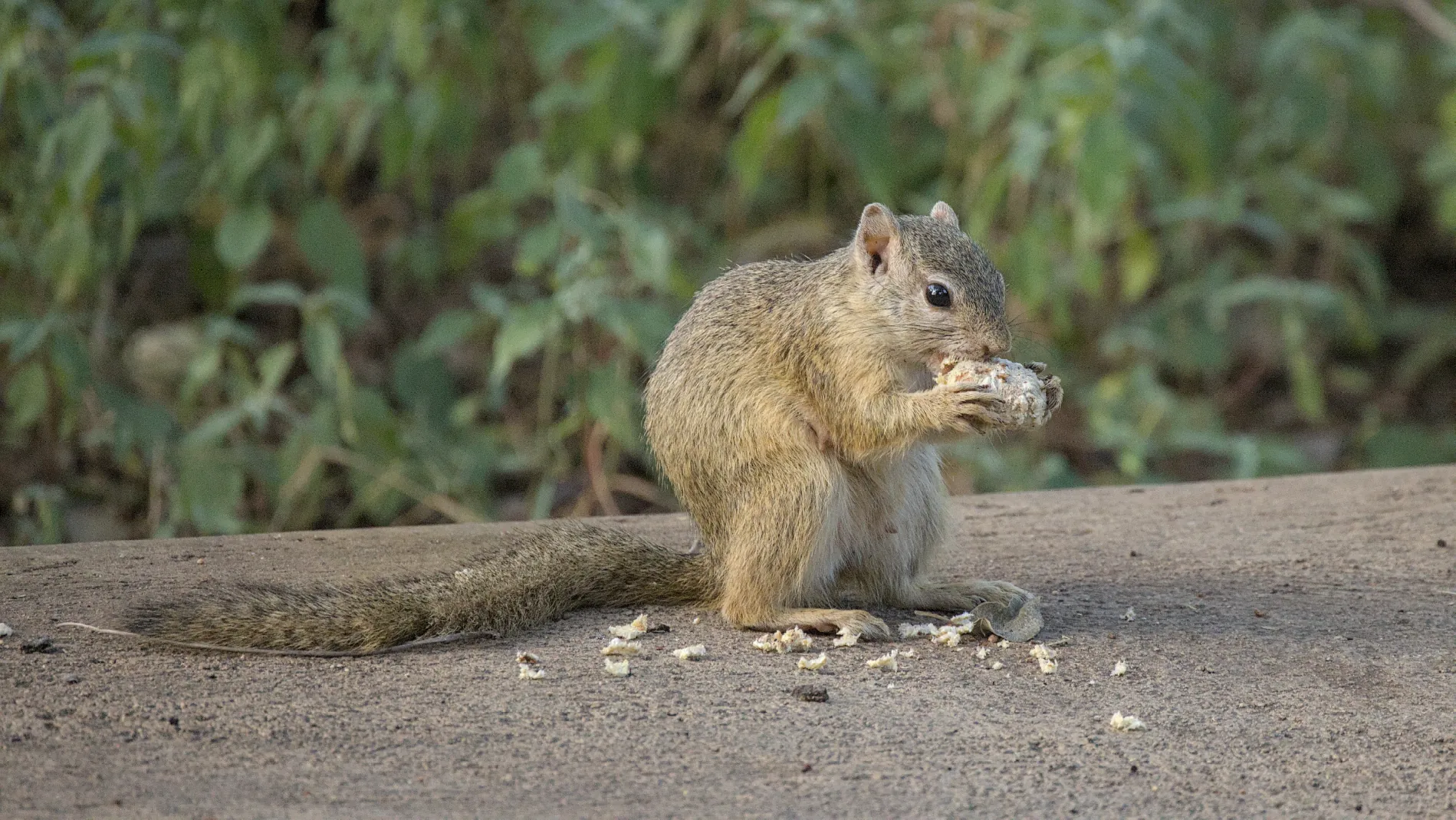
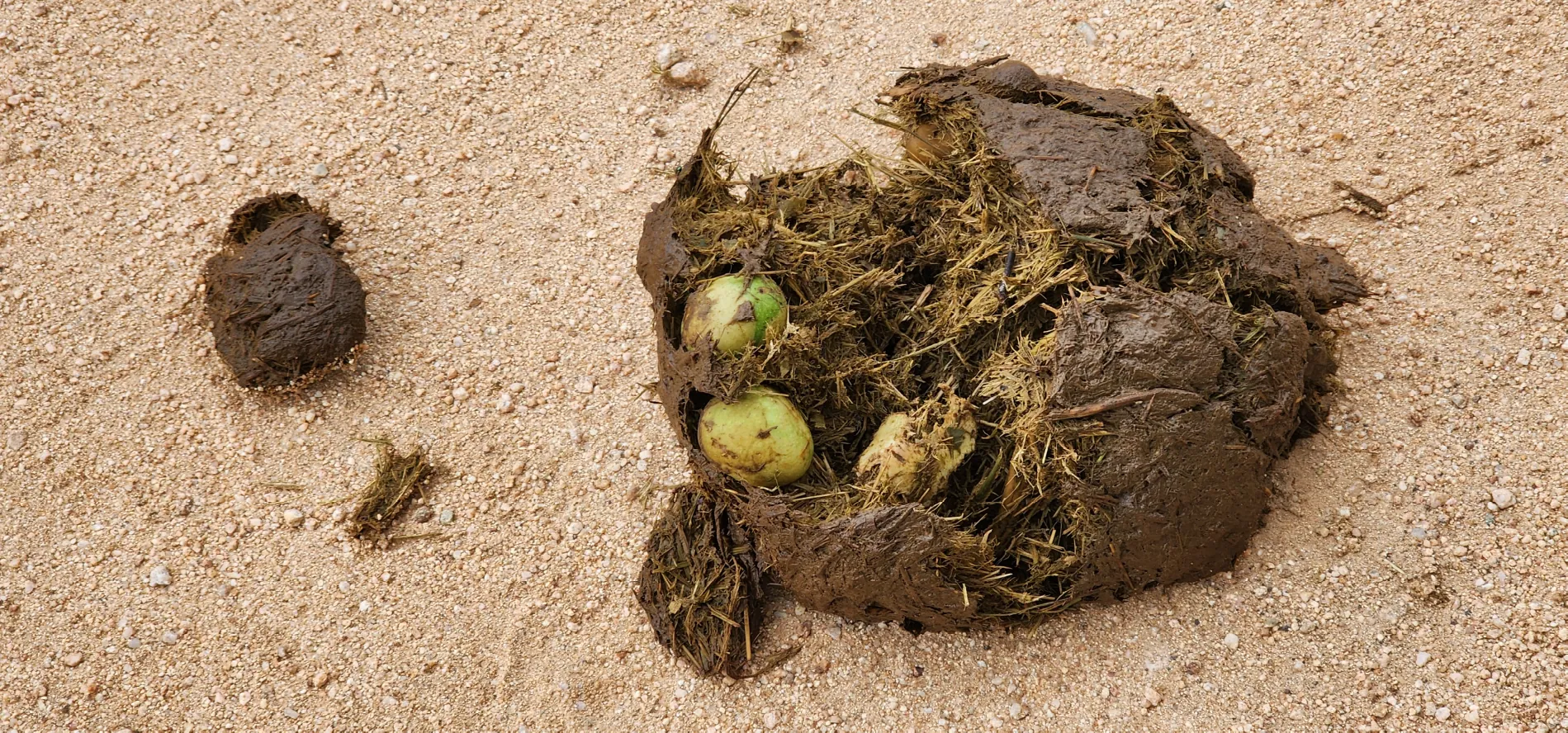
Marula fruit is often picked up and eaten by mammals after the fruit falls from the tree. Elephants in particular consume large numbers of marula fruit during the ripening season, with almost all elephant dung in Kruger National Park containing partially crushed fruit during March. Elephants swallow the fruit whole, or pop the fruit perhaps for the taste, but do not crush the stone. It is not only elephants that take the fruit and leave the stone intact. Many antelope, such as common duiker and nyala, will pick up the fruit and crush it in their mouths. Unlike the elephant, however, they spit out the intact stones. African tree squirrels often follow antelope that are feeding on marula seeds and pick up the stones.
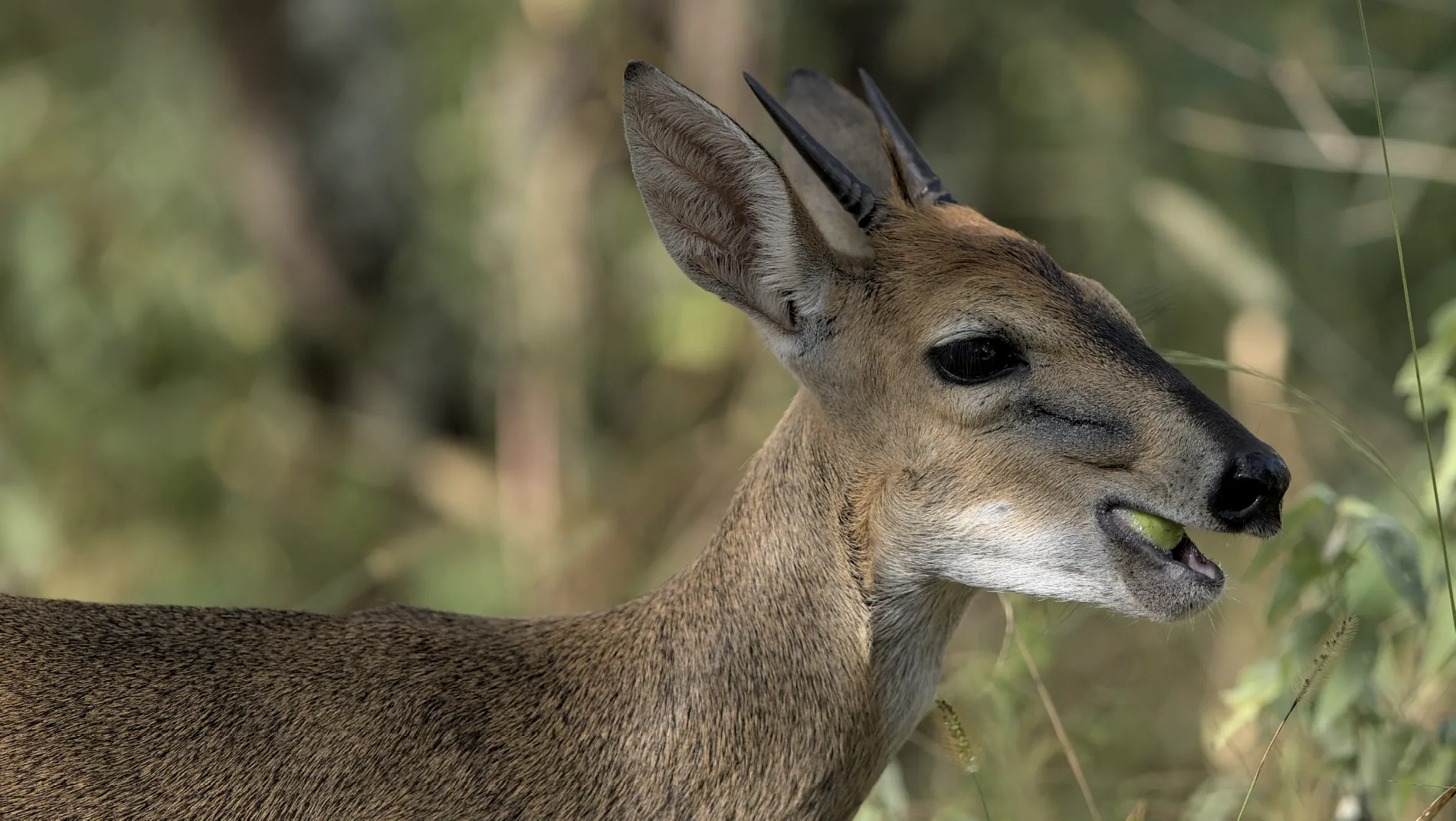
In the example illustrated, the duiker has picked up a fruit and crushed it, but spits out the endocarp with some fibres around it, often along with the skin. The African tree squirrel (Paraxerus cepapi) picked up the fruit and attempted to extract the nutty seeds. Squirrels often take the nuts away for storage.
Tree squirrels also remove the stones from elephant dung, and scatter them as they hoard them for later feeding. I have seen squirrels burying stones in the ground, but also placing them in holes in trees. They do bite into the stone, and may remove one seed, leaving the other to germinate. They may also consume both seeds, but the fact that they don’t always find their hoard, and may leave one seed intact, means that squirrels can be important in marula seed dispersal.
From a human perspective, elephants seem to have a love-hate relationship with marula trees. On the one hand, they consume vast quantities of the fruits. On the other, elephants frequently remove the bark from the tree, ring-barking the tree and killing it. Not long ago there were large numbers of marula trees in the Satara area of Kruger National Park. Over the last few years many of the remaining intact trees have been ringed and are either dead or moribund.
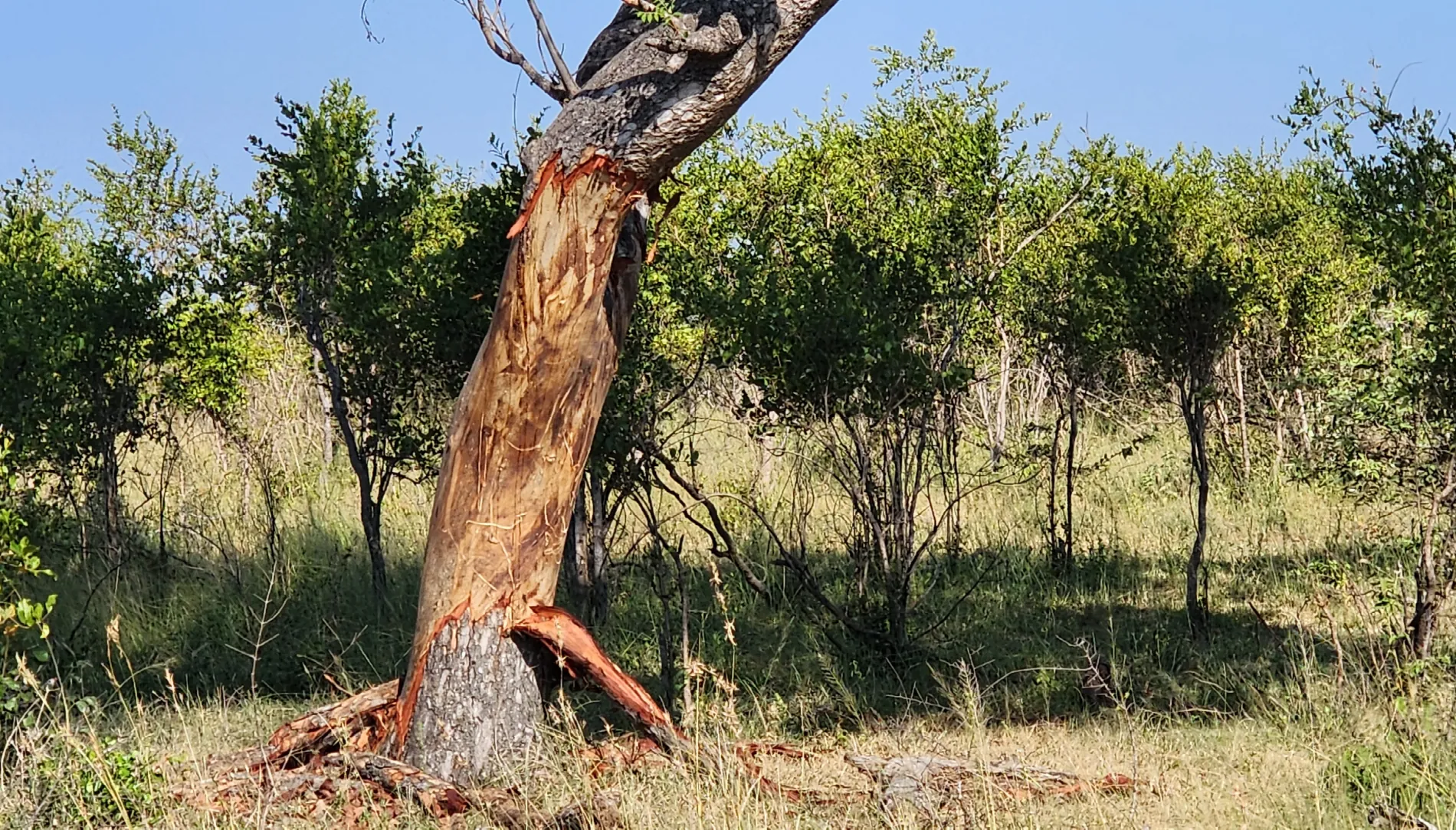
Not all marula tree mortality is caused by elephants. Termites of the genus Coptotermes can enter trees through damaged areas and natural holes. They can establish a secondary nest inside the tree, and leave the tree hollowed out, and more susceptible to elephant damage and other factors. Both elephant and porcupine damage to the tree can create opportunities for termites to enter the tree and cause further damage.