Once upon a time, I had the incredible privilege of spending a year on sabbatical in Fiji. While there, I dived almost every day, studying the calcified coralline algae on the coral reefs there. I was based out of the Marine Studies Program building on the shore of the lagoon behind the amazing offshore barrier reef. The building was a Second World War wooden building that we always joked was held together by termite poop. That building has since been replaced by a modern research and teaching facility.
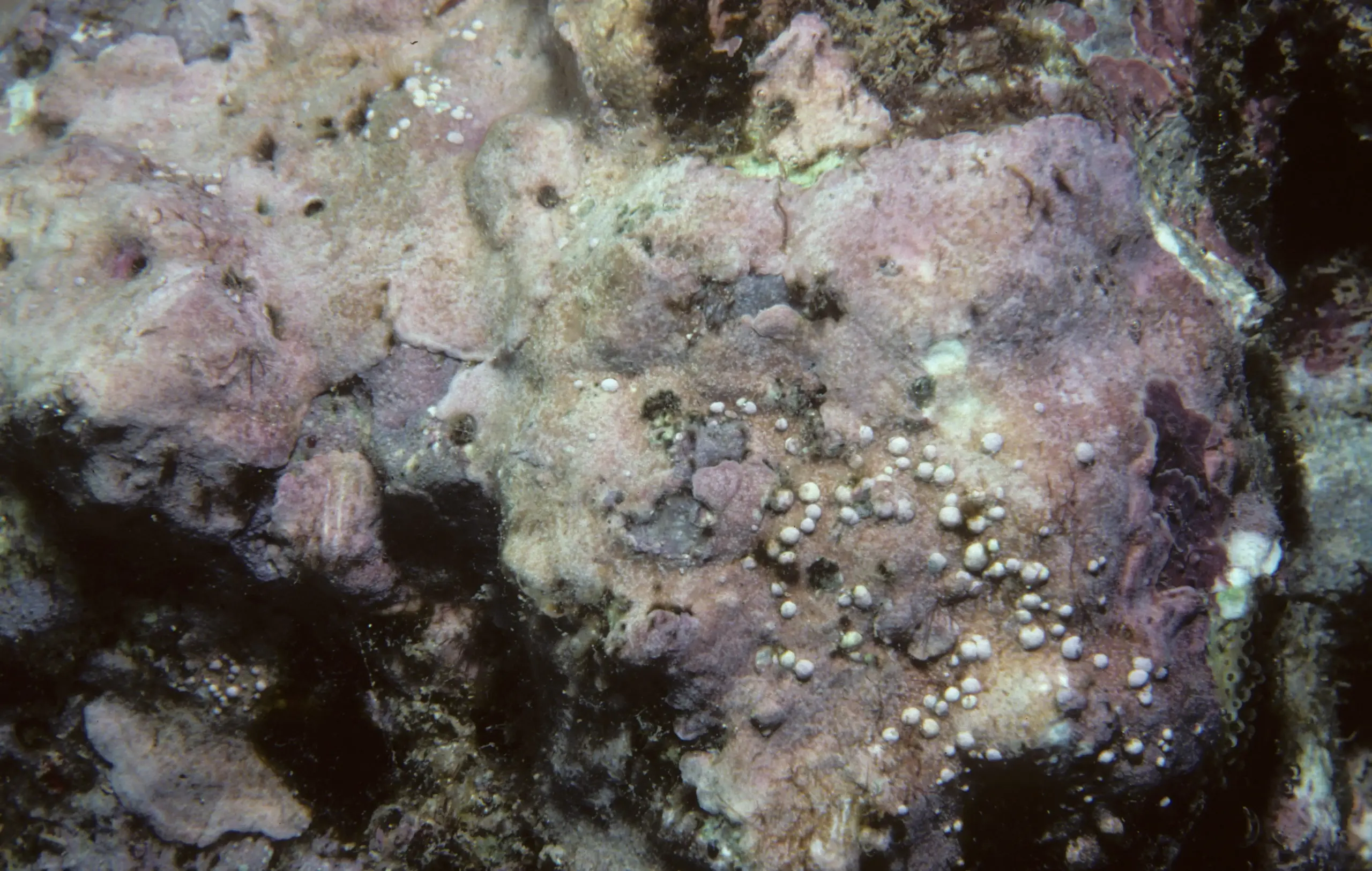
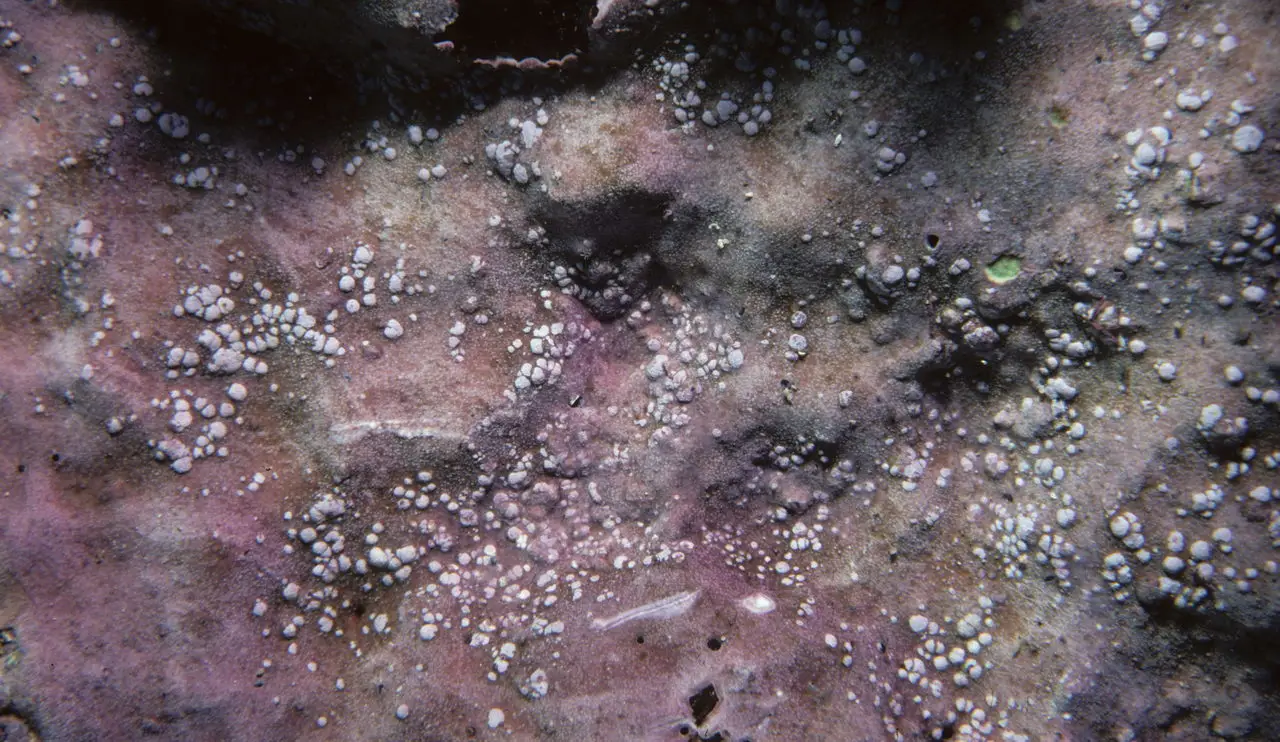
I spent a lot of time under water, and not long after I arrived in Fiji I found something strange, the white stuff on the pinkish stuff in the photo below. The pinkish stuff is a coralline alga that at the time we knew as Hydrolithon onkodes (corallines seldom have common names, though they should). It is now know by its former name Porolithon onkodes, part of a species complex that is of considerable importance in coral reefs all around the tropical the world.
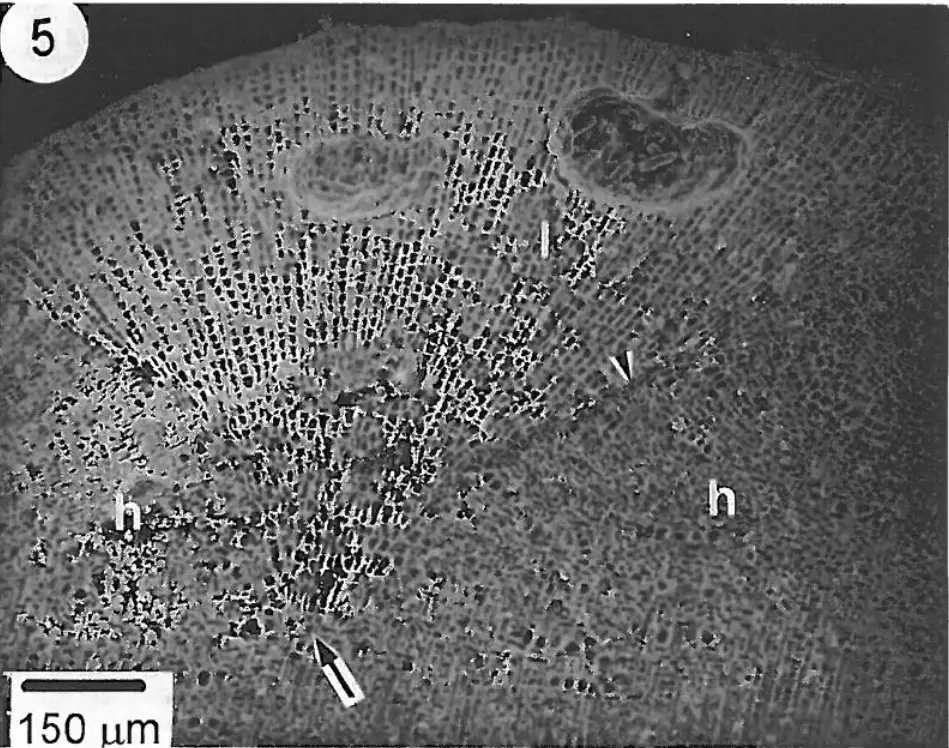
But what was the white stuff? Could it be a disease? A parasite? I collected some specimens and took them back to the lab, where I made some sections for microscope work. It turned out, from the microscopy work, to be a species of the genus Lithophyllum. It was clear that there was nothing like it in the literature. When I was back at the University of the Western Cape in Cape Town I was able to do some scanning electron microscopy on it to finish characterising the new species. I named it Lithophyllum cuneatum, so it now has the official designation Lithophyllum cuneatum KEATS, which is kind of cool.
The name ‘cuneatum’ refers to its distinct inverted cone shape that appears as a wedge in sectional view. Cuneate means wedge-shaped, primarily used in botany to describe leaves or leaf bases that are narrow at the point of attachment and taper toward a wider apex. It is a Latin-derived term (cuneatus) referring to a triangular shape.
Both L. cuneatum and P. onkodes belong to the coralline red algae. Coralline red algae are common intertidal and subtidal inhabitants from polar to tropical regions of the world’s oceans. They are the only red algae in which most vegetative cell walls are impregnated with calcite, the most stable form of calcium carbonate. Other red algae have the less stable aragonite form of calcium carbonate. They belong to the red algal subclass Corallinophycidae, with corallines falling into three orders, the Corallinales, Sporolithales, and Rhodogorgonales. Both of these species are in the Corallinales.
Porolithon onkodes is one of the most common coralline algae on coral reefs, and probably without it, coral reefs would not exist. Lithophyllum cuneatum is colourless, which suggests it gets its nutrition somehow from the P. onkodes, but nobody has ever studied it enough to know. Inside the host, it looks like an inverted cone, but there are no obvious connections of L. cuniatum with the host, though I have only looked at the scanning electron microscope level, never with a transmission electron microscope. Some work to do there for someone.
Since the original paper, several other researchers have studied this species, though not from an ecological/nutritional perspective. The species has been found in the fossil record going back hundreds of thousands of years, as well as living specimens from many other tropical and sub-tropical areas. It appears to be widespread, and to have been widespread for a long time.
It just goes to show that there are so many more things in the sea, and so many more processes than we understand. Lots of work for budding marine biologists. I worked on coralline algae back then because they were ubiquitous in shallow marine environments, but were very poorly understood and little ecological work had been done on them.
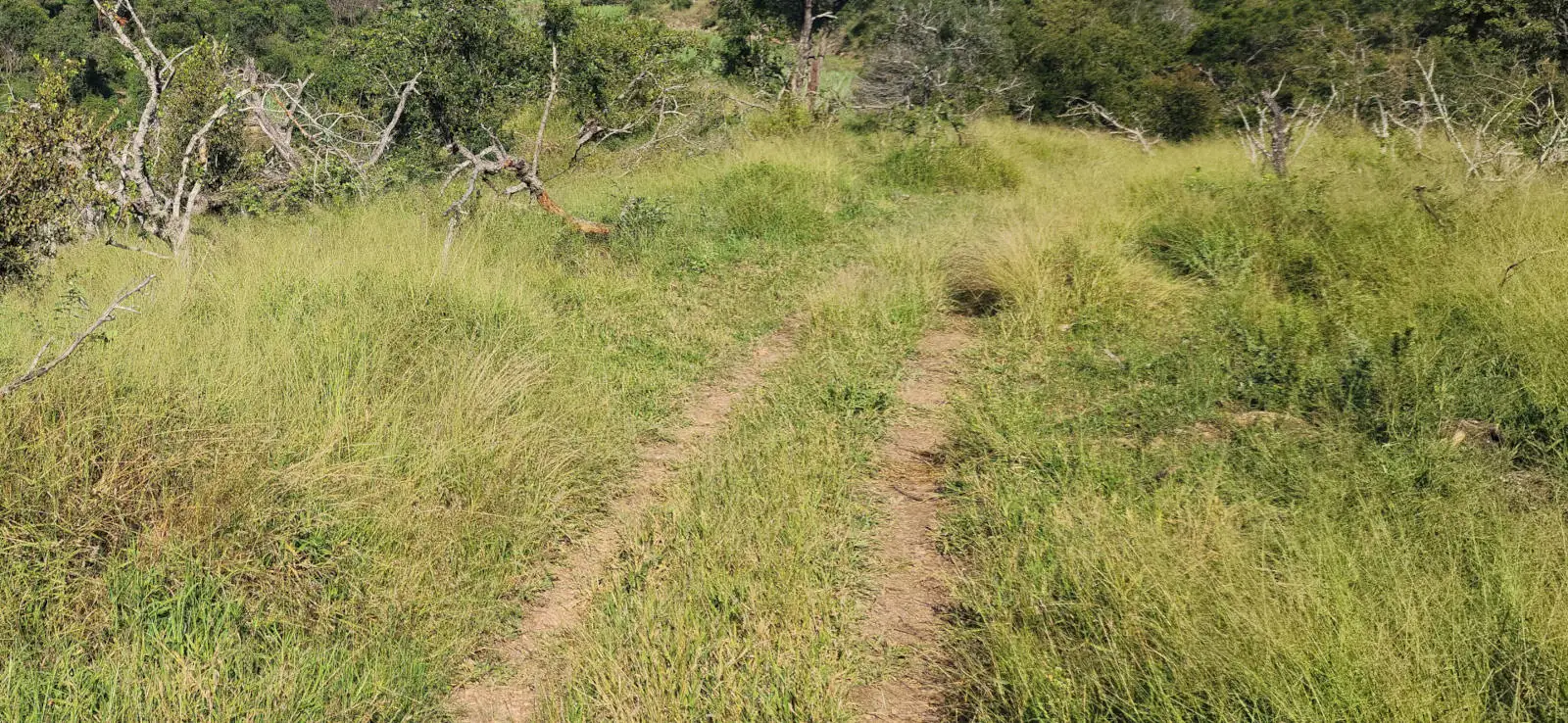
Now that I am trying to learn as much as I can about grasses, I realise that there are a lot of parallels there. Grasses are ubiquitous in terrestrial ecosystems, and dominate much of the ground cover in savanna ecosystems, such as the one here in the South African Lowveld. They are very poorly studied ecologically, and there is considerable potential there for further research. Grasses may well be the coralline algae of the land.